

If you’ve been paying attention to chemtrails, you may have observed rainbow smearing (diffraction) of light reflected off them. Dark sunglasses can bring the subtle rainbows into the dynamic range of the human eye. Chembows are often visible when the sunlight reflects at approximately 45• angle to the chemtrail. Wikipedia entry on diffraction
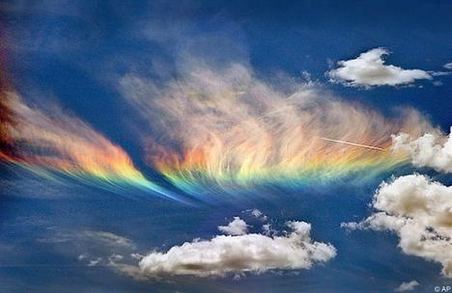
A popular chembow image. Notice how only the wispy remnants of the chemtrail diffract the sunlight, not the clouds.
Diffraction is a quantum interaction between photons of light and edges of atoms. When metallic surfaces have features smaller than a wavelength of visible light (nanometer scale), different wavelengths will be reflected at different angles. When features are ordered in a linear pattern (such as on a DVD optical disc), a rainbow will appear.
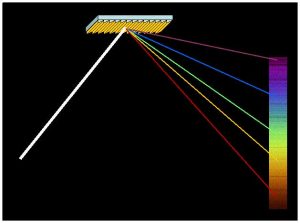
Illustration of white light diffracting off a metallic diffraction grating
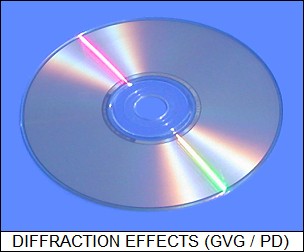
In the rain, or other atmospheric conditions where water droplets are large enough, rainbows appear due to refraction. Atmospheric refraction (such as from a rainbow in a rainstorm) is a similar phenomenon to chemtrail diffraction. Its important to note, however, that rainbows can be seen in light reflected off chemtrails, not only refracted from behind, which may occur under other atmospheric conditions, such as the presence of large ice crystals or droplets.
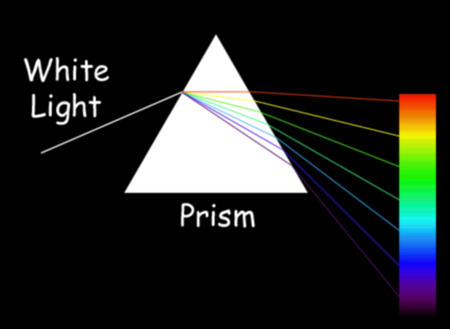
Refraction thru a prism (or water droplet of sufficient size). Refraction occurs when light passes thru a surface into a material with different index of refraction
More examples of chembows:
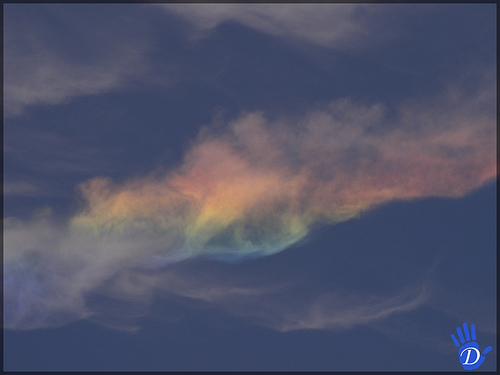
Dark sky indicates reduced exposure, necessary to bring rainbow into dynamic range of the sensor.
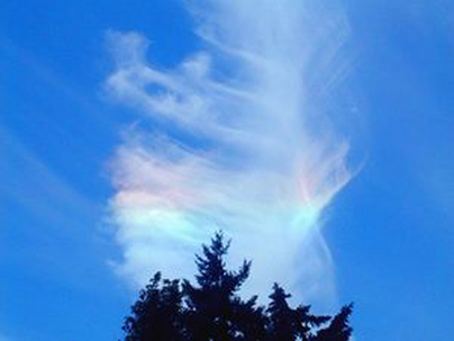
Filamentous wisps may indicate presence of heavier-than-water particulate aerosol. Pink and green dominate the rainbow, matching emission spectra of barium.
Leave a Reply